
Four enclosures, one script: choosing SolveBlock's shape
Block, flat, wedge or stand? Generating every candidate enclosure from one parametric source turned an argument about taste into a quick, fair comparison.
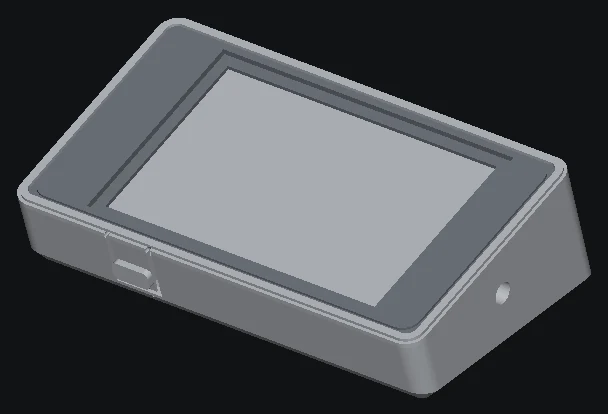
At some point every hardware project has the shape argument. Should it be a block that stands up? A flat slab? A wedge that tilts the screen toward you? Opinions arrive fast and data arrives slowly.
For SolveBlock we skipped most of the argument by making the shapes cheap.
One source, many shapes
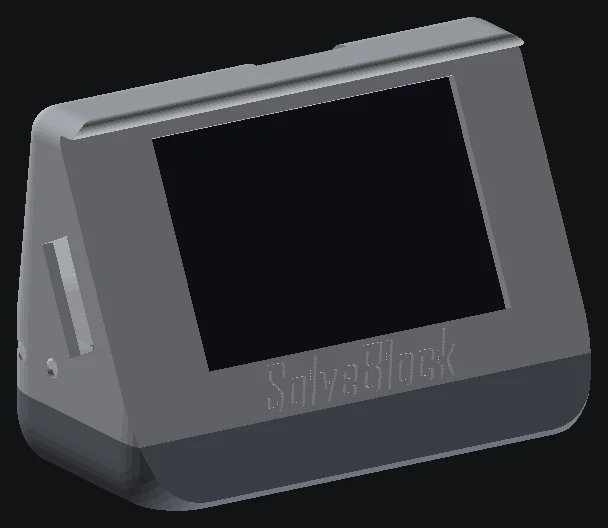
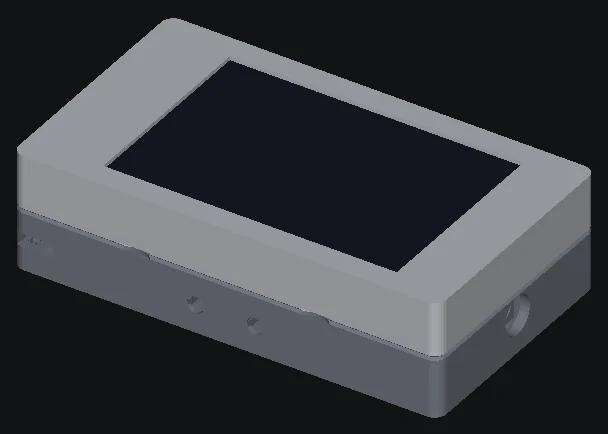
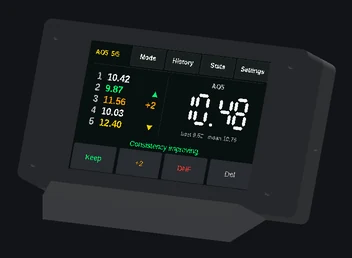
All four candidates come from the same parametric source. The board outline, screen window, cable exit and mounting points are shared variables; the shape is a parameter on top. Changing the case is a re-run, not a redraw — and because every candidate shares the same internals, comparing them is fair. The only thing that differs is the thing you're trying to decide.
I've written about designing enclosures as code before. This is where it pays off: four shapes cost roughly what one would by hand.
What each shape is good at
- Block — stands on its own, small footprint on a crowded practice table, screen upright.
- Flat — lowest profile, hardest to knock over, but you look down at it.
- Wedge — tilts the screen toward a seated cuber; the natural "glance between solves" angle.
- Stand — the screen raised and angled, the most readable at a distance.
How we decided (and why it isn't decided by me)
The deciding question was the same one every SolveBlock feature answers: does this help a cuber solve faster? That means the shape has to survive an ordinary practice evening: hands moving around a mat, a timer next to it, a glance between solves rather than a stare.
The person who gets the veto is the cuber, not the engineer. Printed shells beside a real mat answer questions that renders can't: does it slide, does it block the timer, can you read the average without leaning in?
We're also asking the people who'll use it. The SolveBlock site has a "What shape should it be?" section, because the cheapest way to pick a shape is to let the people who'll live with it vote — and parametric design is what makes offering four real options possible at all.
AI in the geometry
Agents work the enclosure geometry: proposing variations, checking fit against the board outline, catching parameter combinations that would collide. That's exactly the kind of work that rewards being checked a thousand times rather than once. The decision itself stays with people holding printed plastic.
Takeaways
- Make candidates cheap enough that you can compare them instead of arguing about them.
- Hold everything constant except the thing you're deciding.
- Give the veto to the person who has the problem.
Some links in these notes are affiliate links. If you buy through one, I may earn a commission at no extra cost to you. I only link to tools I use or would recommend.